Signs That You Have Mold in Your Water Pipes
Can water get moldy? Yes. Mold grows in standing water and on the damp surfaces water touches, such as pipes, water heaters, and storage tanks, especially when water sits unused for days. Common signs include a musty smell or taste, cloudy or discolored water, and slimy buildup on fixtures. If you notice any of these, a comprehensive water analysis can confirm what is in your water and what to do next.
Though mold is common in homes, it’s not as common for mold to grow in the interior of water pipes or filters. While it’s not likely, the bad news is that it is possible for your drinking water to contain mold. EcoWater Systems wants you to know how to watch for mold in your water and how to recognize the signs that you have mold in your drinking water.
Mold needs water, oxygen and food to live. Mold spreads through spores, which are usually airborne. These spores can move, land and grow on anything that provides them with the components they need to survive. Water pipes don’t have adequate oxygen or food for mold to grow significantly, but they do have a moist, dark environment that allows mold to form. Certain circumstances will even allow mold to thrive in your drinking water.
How Can My Water Get Mold?
If your water source comes from a well, then you might be at risk for mold in your water if your well cap is damaged or is not adequately sealed. It’s also possible for mold to survive even if your water supply comes from your city or town. If your system has high levels of oxygen and an organic food source (this could be something as simple as a paper filter cartridge), mold has the ability to survive in your water. Keep in mind that mold might contaminate your water supply pipes, water well, water softener, water storage tank or any other water distribution systems you might use.
What are the Signs Your Water Has Mold?
There are some simple signs that can mean you have mold in your water:
- You smell mold when you run your water.
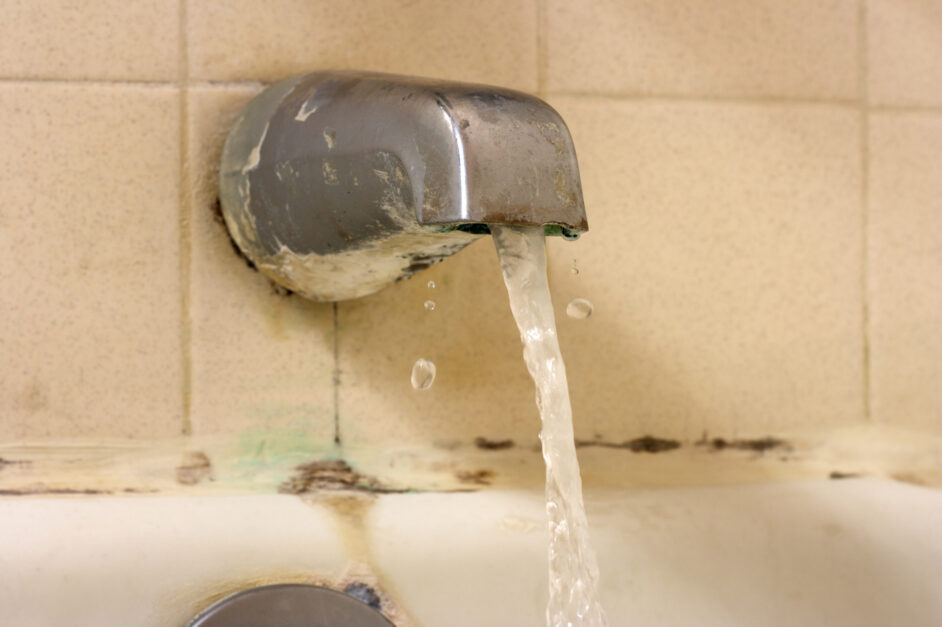
- You see buildup on the sides of your shower.
- You notice dirt-like substance at the bottom and sides of your toilet.
- Mold is growing in other locations around your home.
Quick guide to moldy water signs
If you spot one of these signs, this table shows the likely cause and your next step.
Sign | Likely cause | What to do |
Musty or earthy smell | Bacteria, algae, or mold in pipes, fixtures, or the water heater, especially where water sits | Run the cold tap for a few minutes. If the smell stays, schedule a free water diagnosis. |
Stale or earthy taste | Microbial growth or buildup in plumbing or storage tanks | Stop drinking the water, use bottled water, and have a professional analyze your water. |
Cloudy or discolored water | Trapped air, sediment, minerals, or growth inside plumbing | Fill a clear glass and wait. If it clears from the bottom up, air is the likely cause. If it stays cloudy, schedule a water analysis. |
Slimy film or dark specks on faucets and showerheads | Mold or bacteria growing in damp fixtures | Clean or replace the faucet aerator or showerhead. If the film returns, have your plumbing checked. |
Black or green spots on pipes or around the water heater | Mold from leaks, condensation, or damp surroundings | Fix the leak, dry the area, and remove the mold. Anyone with asthma, allergies, or a weakened immune system should not do the cleanup. |
What Causes Mold to Grow in a Home?
Mold is a naturally occurring fungus that exists everywhere, proliferating in areas containing significant moisture.
For mold to grow in a home, it needs the following conditions:
- Mold spores.
- A food source, such as wood or drywall.
- Darkness, since mold can’t grow in ultraviolet light.
- Warmth, since mold can’t grow in freezing temperatures.
- Oxygen.
- Moisture.
- Time.
Most of these conditions are present in homes, but moisture is the biggest factor in mold growth.
Household causes of mold may include:
- Humidity: If the weather is humid, you may notice mold growing in certain areas of your home. Humidity may also result from long periods of rain or from proximity to the coast or a large body of water. Some molds only need a humidity level of 55 percent to begin growing.
- Leaking pipes: Water leaks from pipes are a common cause of mold, especially when they go undetected and occur out of view, such as a leak inside a wall. In many cases, the mold has already begun to grow by the time you discover the leak.
- Roof leaks: A roof can leak into the walls or attic and cause mold growth that goes undetected for long periods of time. Whenever possible, check your attic for leaks and pay attention to any signs of water damage on the ceiling.
- Condensation: Cold surfaces create condensation that may collect on metal pipes or concrete floors. These are ideal locations for mold growth.
- Wet clothing: If you leave clothes wet for extended periods of time, such as damp clothes waiting to be washed, mold may begin to grow on them or other surfaces.
- Flooding: If your home has been affected by flooding, you’re likely to experience some mold problems. It can take weeks or months for your home to dry out, giving mold plenty of opportunity to grow.
Symptoms of Mold Exposure
Exposure to mold can cause a variety of health issues, or none at all, depending on the person exposed. Some people are more sensitive to mold, and exposure to it can result in symptoms like nasal stuffiness, throat irritation, coughing, wheezing, skin irritation and eye irritation. These symptoms are more severe in people with mold allergies.
For people with compromised immune systems or respiratory conditions, such as lung disease, mold exposure can cause serious infections that require medical treatment.
How to Remove Mold From Your Pipes?
Water pipes are always wet and dark, which makes it impossible to completely remove mold. However, with a few household items and regular maintenance, you can keep the growth of mold in your pipes under control and prevent health concerns.
Here are the steps you should follow to remove and prevent mold in your pipes:
- Pour half a cup of household bleach into your drain and allow it to sit for at least one hour.
- Boil two cups of water and pour down the drain, then run the hot water from the tap for several minutes.
- Pour a quarter-cup of baking soda into the drain.
- Pour one cup of vinegar into the drain and allow it to sit for 15 minutes, which gives the combination of baking soda and vinegar sufficient time to kill the mold.
- Boil two more cups of water and pour into the drain, then run the hot water for several minutes.
These steps may be repeated as needed. You may use this mold-prevention method as often as once a week, but it’s recommended to do it at least once a month to prevent the growth and spread of mold and maintain healthy pipes.
What to Do About Mold in Your Water?
According to the Southern Nevada Water Authority, “Home water treatment systems may improve the aesthetic qualities of tap water, such as hardness, odor and taste.”
If you want professional help dealing with mold in your drinking water, EcoWater Systems can help. We can provide you with a comprehensive water analysis, and after we diagnose your system, we’ll tailor a solution that removes the mold contamination from your water.
EcoWater is one of the world’s largest manufacturers of water treatment systems, and our products are designed to help you remove contaminants from your water as well as save you money and energy. We want you to have healthy, great-tasting drinking water. Contact EcoWater Systems today!
Moldy Water FAQs
What happens if you drink moldy water?
Drinking moldy water affects people differently. The CDC says mold exposure may cause a variety of health effects or none at all, from a stuffy nose, coughing, or skin rash to severe reactions in people with asthma, allergies, or weakened immune systems. Stop drinking the water and talk to a doctor if you feel sick.
What does moldy water taste like?
Moldy water often tastes musty, earthy, or stale, and it may smell like a damp basement or wet cardboard. A bitter or metallic taste can also point to a plumbing problem. If your water tastes off, stop drinking it and test it before you decide on a fix.
What does mold in water look like?
Mold in water can show up as slimy film, dark specks, or black, green, or pink buildup on faucets, showerheads, and tank walls. The water itself may look cloudy or discolored. Minerals and trapped air can cause similar changes, so confirm with a water analysis.
What should you do if you drink moldy water?
Stop drinking and cooking with the water, and use bottled water until you know the source. Call a doctor if you have stomach pain, vomiting, or allergy symptoms, especially if you have asthma, allergies, or a weakened immune system. Then have a professional check your water and plumbing to find the source.
Can mold grow in water pipes?
Yes. Mold needs moisture and something to feed on, and pipes can provide both when water sits or leaks. It tends to show up in older plumbing, dead-end pipe runs, and water heaters or tanks that rarely drain. Slow leaks and condensation can also feed mold on the outside of pipes.
How do you test for mold in water?
Start with a professional water analysis. EcoWater’s free in-home water diagnosis checks water quality markers such as pH, total dissolved solids, and hardness, and gives you access to professional water labs when you need lab testing. Also check faucets, showerheads, water heaters, and tanks for slime or discoloration.
Why does my tap water smell or taste moldy?
The Las Vegas Valley Water District reports that the water it delivers meets or surpasses state and federal Safe Drinking Water Act standards. Musty smells often come from bacteria, algae, mold, or sediment in your plumbing or water heater, where water sits. If the smell persists, schedule a water test.